
NHSA Blog
 Safe Driving: Walk Around Before You Roll Out
A person can learn a lot about maneuvering a vehicle from video games, much as a pilot can train on a flight simulator. But one huge step is usually missing from driving games—the few moments that each driver should take outside of their vehicle, before they open the door, plop down into the driver’s seat, and grab the steering wheel.
Yes! Safe driving actually begins as you approach your vehicle. A quick walkaround can help you spot issues that might otherwise become much bigger problems once you start moving. Ask yourself, “Has anything important changed since I parked the car?”
Look around and down
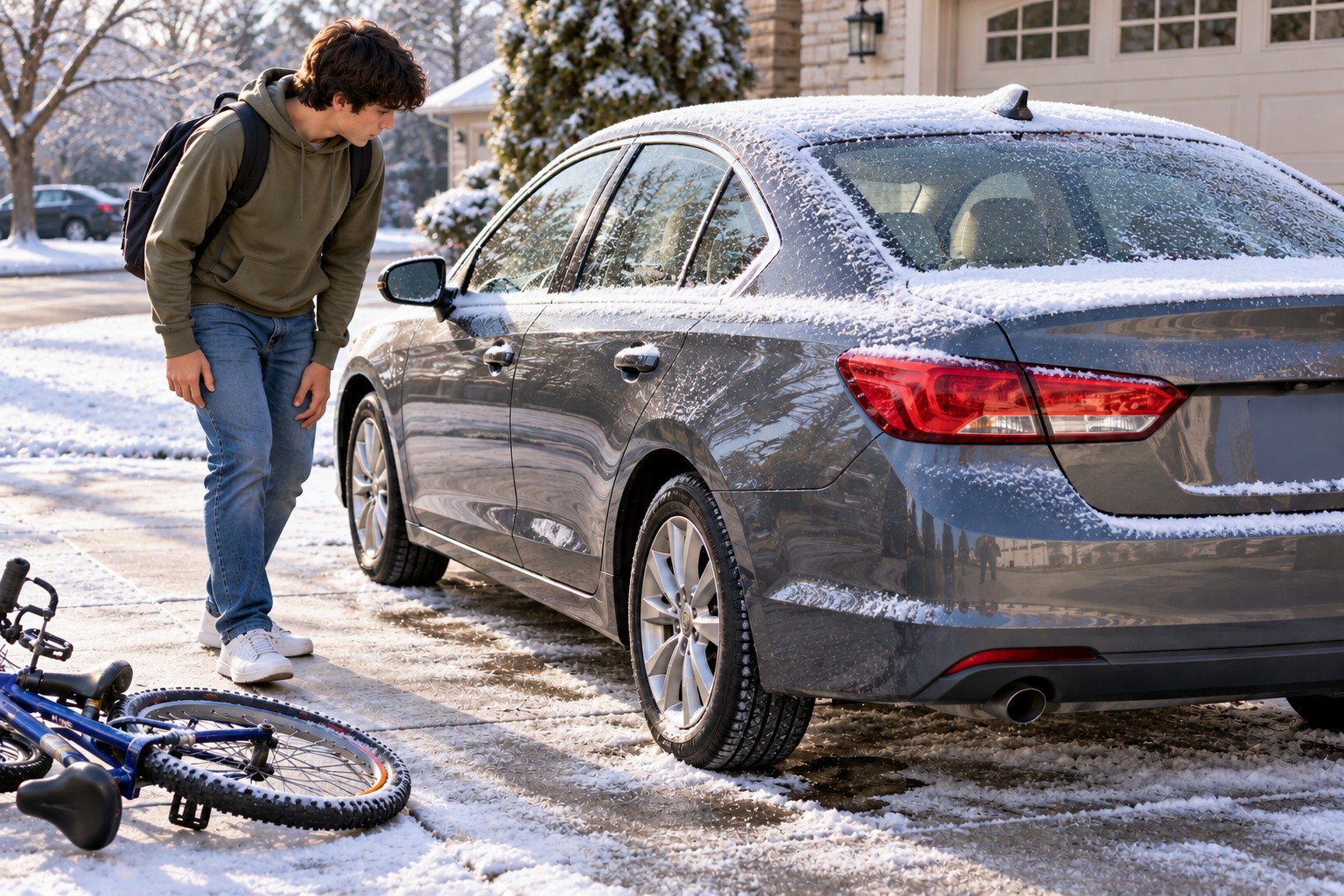
As you walk toward your vehicle, pay attention to the area around it. Look for pedestrians, bicyclists, children, pets, shopping carts, or anything else that could create a hazard when you pull away. For example, did a child leave a bicycle lying in your driveway?
Also take a quick look at the ground beneath the vehicle. Did someone leave a glass bottle near your wheels? Is there broken glass? Is a dog hiding under the car? Is your vehicle leaking? A puddle of water from the air conditioner may be perfectly normal, but a puddle of oil, coolant, or another automotive fluid might require prompt maintenance.
Don’t just check on the driver’s side. You need to see the whole area. Small children, pets, bicycles, toys, low objects, and other hazards can be difficult or impossible to see once you are sitting in the driver's seat. Rearview cameras are extremely helpful, but they shouldn't replace checking the area before you get in.
A quick vehicle walk-around
You don't need to perform a professional vehicle inspection every time you drive, but developing the habit of checking your vehicle will help you to catch problems sooner.
- Tires: Do any look noticeably low or flat? Is there obvious damage?
- Windows and mirrors: Are they clear enough to provide good visibility?
- Lights: Do you notice a broken or damaged light?
- Vehicle damage: Is there new damage you weren't expecting? Hopefully nobody dinged your door with a shopping cart while you were away.
Look inside
Before opening the vehicle, take a quick look through the windows. Check the seats and floor for anything unusual, especially if the vehicle has been parked in a public area or left unattended for a while. Is there a person or an animal lurking in the back seat? If something doesn't look right, don't just open the door and get inside. Move to a safe location and get help if necessary.
How is your vehicle faring in the weather?
Snow, ice, frost, mud, fallen leaves, and even heavy dew can affect visibility. Before driving, clear your windshield, windows, mirrors, headlights, and other areas necessary for safe operation. Don't settle for scraping a tiny viewing hole through an icy windshield. You're driving a car, not looking through a submarine periscope.
If snow has accumulated on the vehicle, remove it from the roof, hood, trunk, lights, and windows so it doesn't slide across your windshield or blow onto other road users once you start moving.
Trunks, backseats, and cupholders
Before getting into the driver's seat, think about what you're putting in the vehicle. Groceries, backpacks, sports equipment, tools, and other loose objects should be placed where they won't interfere with the driver or roll underneath the pedals. Make sure that hanging clothes, such as dry-cleaned items, will not block your view when driving. Heavy items should be secured whenever possible. This may mean taking the time to put them in a trunk or cargo area instead of tossing them on a seat.
And if you're carrying a hot drink, make sure it has a secure place to sit. Don’t try to be a juggler while driving. A sip of coffee can be wonderful. Hot coffee on your lap is very un-fun.
Now you are ready to sit down, fasten your seat belt and perform some pre-start tasks. Remember these walkaround tips each time you walk towards your car. Safe driving before you ever open the driver's door.
At NHSA, our goal is to provide online driver education courses that equip all drivers with what they need to be safe drivers. Whether you are a teen seeking a learner’s permit, or an adult driver seeking a basic driver safety course, check us out online to see what courses are available in your state!
Tips for Finding a Reliable Mechanic
You're driving down the highway and everytime you go over 60 mph you begin to hear an unsettling rattling sound and the car begins to shake. You need your car to get to work and around town, so what now? You need this fixed ASAP.
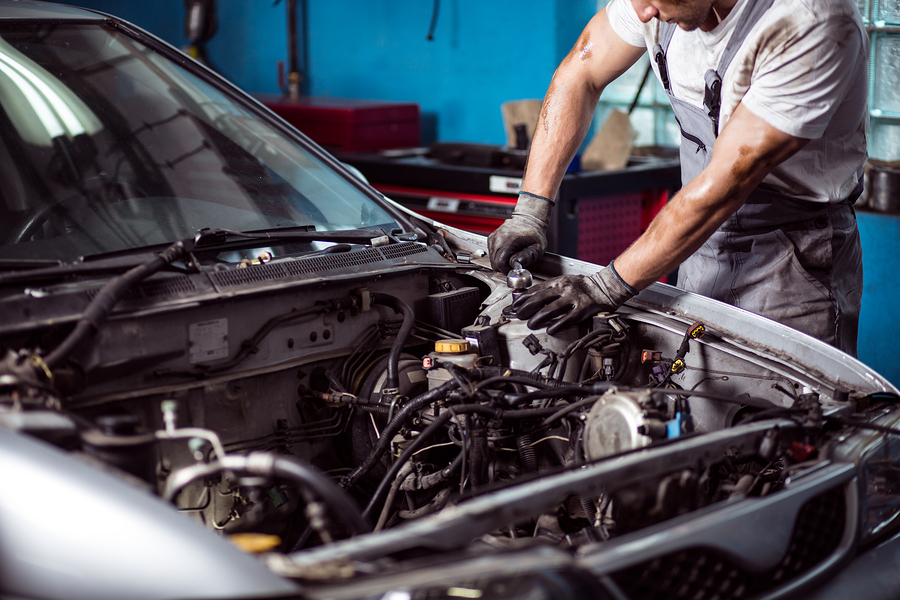
Having a mechanic and owning a car work in tandem. Whether it’s for regular maintenance or emergency issues, finding someone you can trust can make the difference in how much you spend and in how long your car runs. Doing a little research before your check-engine light comes on can save you a lot of stress when it finally does. So is it better to find a backyard mechanic or neighborhood shop or go directly to the dealership? How can you find a reliable mechanic to trust with your new “baby”? Here are some tips.
Backyard/Independent Shop Mechanics
Pros:
- You can build a relationship with the mechanic and receive more personal service.
- A mechanic who knows your car may be familiar with its repair and maintenance history.
- Independent shops may offer more flexible scheduling.
- This often cost less than dealerships.
Cons:
- Independant shops may not have the specialized tools or diagnostic equipment needed for some newer vehicles.
- Smaller operations may have fewer resources or take longer to complete certain repairs.
- Informal backyard mechanics may not offer written warranties or carry liability insurance.
Dealerships
Pros:
- Technicians are trained to work on the manufacturer's vehicles.
- They have access to manufacturer-specific tools, diagnostic equipment, and repair information.
- This is a good choice for recalls, warranty work, and complicated vehicle-specific repairs.
- Dealerships usually offer OEM parts and maintain detailed service records.
Cons:
- Labor and parts are often more expensive than at independent shops.
- Service can feel less personal, and you may not work with the same technician each time.
- They may recommend additional maintenance that isn't necessarily urgent and is costly.
How to find a reliable backyard mechanic/independent shop or dealership
- Ask people you trust about their experiences and recommendations for trustworthy mechanics.
- Read reviews. After comparing available backyard mechanics and dealerships, look for consistent comments about pricing, communication, and quality.
- Get a written estimate before approving expensive repairs. If a repair seems unusually expensive or unclear, get a second opinion.
- Ask whether a recommended repair is urgent, manufacturer-required, or routine maintenance. A trustworthy mechanic should be willing to explain what needs to be repaired, when, and why.
- Ask what type of parts they normally use and whether you have a choice between original-equipment and aftermarket parts.
- Ask about the warranty on parts and labor.
- Make sure the mechanic has the equipment and experience needed for your particular vehicle.
- Keep copies of your service records so you can track your vehicle's maintenance history.
Whether you choose a backyard mechanic, independent repair shop, or dealership, look for someone who does quality work, explains repairs clearly, and charges a fair price.
At NHSA, our goal is to provide online driver education courses that equip all drivers with what they need to be safe drivers. Whether you are a teen seeking a learner’s permit, or an adult driver seeking a basic driver safety course, check us out online to see what courses are available in your state!
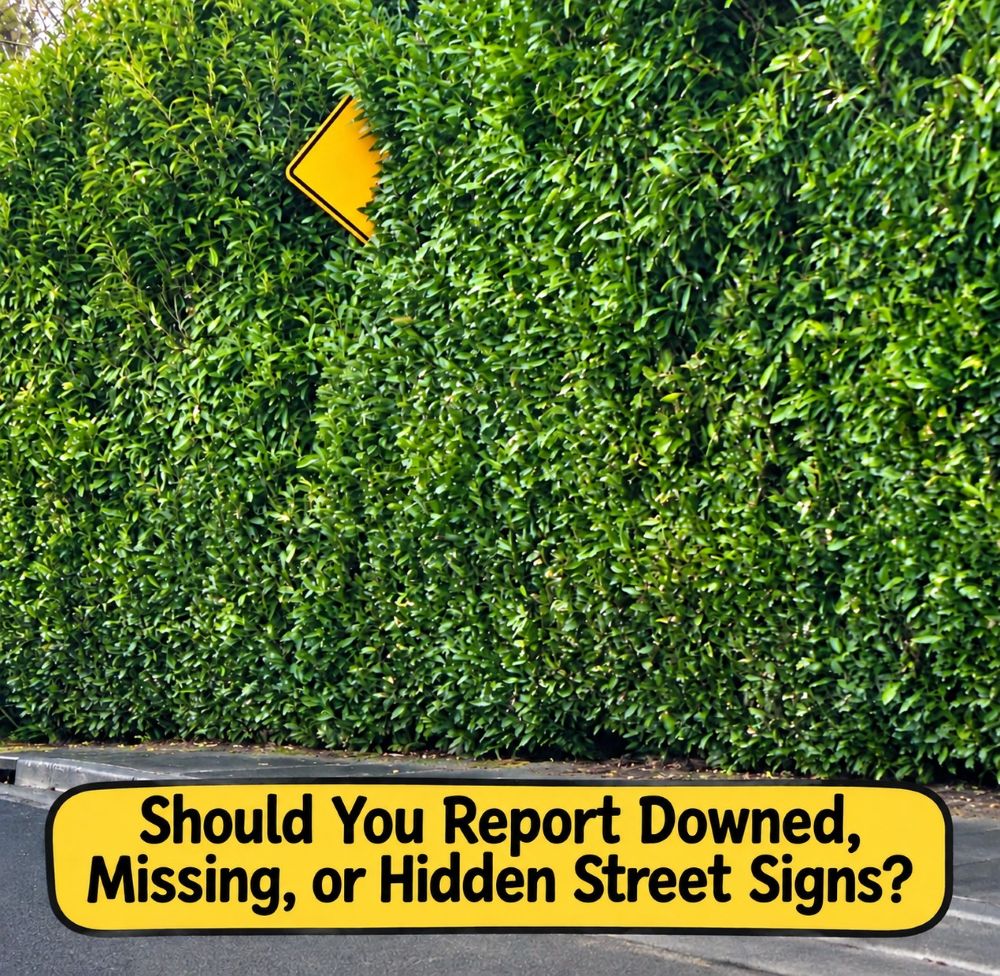
Yes! A missing or hidden street sign is more than an inconvenience—it can be a safety hazard.
In the cartoons, an incorrect or missing direction sign can be hilarious. The unsuspecting traveler follows an arrow, drives straight into a barn, and somehow comes out the other side covered in chickens. In real life, drivers depend on accurate road signs to know where to stop, when to yield, how fast to travel, and where they are going.
Why Reporting a Damaged Sign Matters
Traffic signs are designed to communicate important information quickly. A missing STOP sign could contribute to a serious crash. A knocked-down ONE WAY, DO NOT ENTER, SPEED LIMIT, or warning sign can leave drivers without information they need to make safe decisions.
Even street-name and directional signs are important. They help drivers find their destinations and can also help police, firefighters, ambulance crews, delivery drivers, and others locate an address quickly.
Signs don't have to be completely missing to cause problems. Consider reporting a sign if it is:
Knocked down, missing, or hanging loose.
Turned so that it faces the wrong direction.
Badly bent, damaged, faded, or difficult to read.
Covered by vegetation or another obstruction.
Damaged by a crash, storm, vandalism, or other event.
Blocking the roadway, sidewalk, or bicycle lane.
How Can You Report a Problem With a Sign?
The agency responsible for the sign usually depends on where the road is located and who maintains it. A sign on a city street may be handled by the city's public works or transportation department, while a sign on a county road may be the responsibility of the county. Signs along state highways are generally maintained by the state's transportation agency. Many cities, counties, and state transportation departments have an online form, service-request system, mobile app, or telephone number for reporting damaged traffic signs.
When making a report, provide as much useful information as you safely can. This might include the street or highway name, nearest intersection, direction of travel, type of sign, and a brief description of the problem. A photo can also be helpful when the reporting system allows one. Don't stand in traffic to get the perfect shot. Don’t be unsafe in an effort to promote safety!
A Small Report Can Make a Big Difference
Road crews can't be everywhere at once, so they may not know that a sign has disappeared until someone reports it. Taking a few minutes to report a missing or damaged sign can help get an important traffic-control device repaired or replaced sooner.
At NHSA, our goal is to provide online driver education courses that equip all drivers with what they need to be safe drivers. Whether you are a teen seeking a learner’s permit, or an adult driver seeking a basic driver safety course, check us out online to see what courses are available in your state!
How to Change Wiper Blades
Windshield wipers are one of those car parts you probably don’t think much about—until it starts raining and you realize yours are doing more smearing than wiping. Fortunately, replacing wiper blades is usually a quick and inexpensive DIY job.
Get Familiar With the Parts
Before you start, it helps to know what you’re working with.
- The wiper blade – This is the part that contains the rubber wiping edge that makes contact with the windshield.
- The blade assembly or frame – This supports the rubber wiping element. Traditional wipers have a visible frame, while many newer beam-style blades have a more streamlined design.
- The wiper arm – This is the spring-loaded arm attached to the vehicle. It moves the blade back and forth across the windshield.
How to Remove the Old Blades and Install New Ones
Buy the correct replacement blades. Check your owner’s manual or use a vehicle-fit guide online or at an auto parts store. Keep in mind that the driver’s and passenger’s blades may be different sizes. If you’re unsure, your local auto parts store can usually confirm what you need—and there’s a pretty good chance they’ll have the blades in stock.
- Turn off the vehicle and position the wipers. Some newer vehicles require the wipers to be placed in a special service position before the arms can be lifted away from the windshield. Check your owner’s manual rather than trying to persuade them with brute force.
- Lift the wiper arm away from the windshield. Raise it carefully until you can easily reach the blade and its connector. Don’t force the arm beyond its normal range of movement.
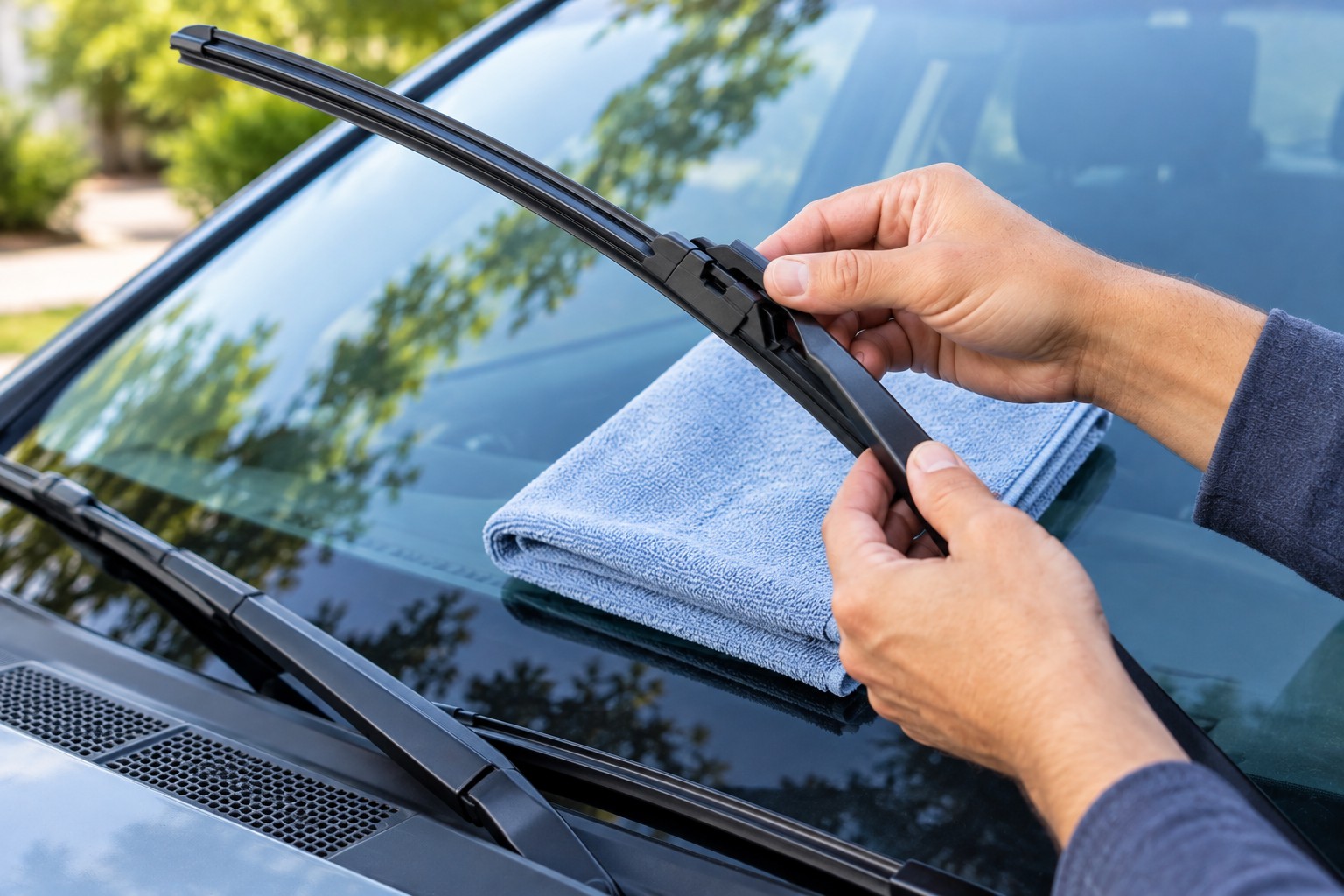
- Protect the windshield. Place a folded towel on the windshield underneath the raised arm. Once the old blade is removed, a spring-loaded wiper arm can snap back against the glass and cause a chip or crack. A towel is considerably cheaper than a windshield.
- Remove the old blade. Find the tab, button, clip, or other connector where the blade attaches to the arm. Release it and slide or pull the blade off. Wiper attachment systems vary, so check the instructions that came with your new blades if the old one seems determined to stay with the car forever.
- Install the new blade. Slide or press the new blade onto the wiper arm until you hear or feel it click securely into place.
- Give it a gentle tug. Make sure the blade is securely attached. Discovering that it isn’t during a downpour is not the preferred testing method.
- Lower the wiper arm carefully. Guide it back onto the windshield rather than allowing it to snap down.
- Test your work. Spray some windshield washer fluid and operate the wipers. The new blades should move smoothly and clear the windshield without excessive streaking, skipping, or chattering.
When Should You Replace Your Wiper Blades?
You don’t necessarily need to wait for a specific date on the calendar. If your wipers are streaking, skipping, chattering, leaving portions of the windshield uncleared, or showing cracked or damaged rubber, it may be time for replacement. Sun, heat, cold, ice, and regular use can all shorten the life of the rubber.
One Important Warning
Never allow a bare wiper arm to snap against the windshield after you remove the blade. The spring-loaded arm can hit the glass hard enough to chip or crack it. Keep control of the arm while you work, and leave a folded towel on the windshield until the new blade is securely installed.
Changing wiper blades isn’t the most glamorous part of vehicle ownership, but the first time you drive through heavy rain with a clean, streak-free windshield, you’ll be glad you spent a few minutes doing it.
At NHSA, our goal is to provide online driver education courses that equip all drivers with what they need to be safe drivers. Whether you are a teen seeking a learner’s permit, or an adult driver seeking a basic driver safety course, check us out online to see what courses are available in your state!

What’s the difference between the Interstate Highway System and U.S. Highways?
You may have been riding on highways for many years without thinking about how the signs change slightly depending on what type of road you are on. If you are taking a long road trip, your travel times could vary drastically depending on which route you choose, so it is good to know your options.
Are you on the Interstate?
Although many roads are called highways, not all of those roads are part of the Interstate Highway System. A big clue is the route marker. Interstate Highways use the familiar red, white, and blue shield. Some Interstate shields include the word “INTERSTATE” at the top, while others display just the route number within the distinctive red, white, and blue design.
The Interstate Highway System is one of the largest and most important road networks in the world. It includes more than 49,000 miles of highways connecting major cities, states, and regions across the United States. The modern Interstate System took off in 1956, when Congress passed the Federal-Aid Highway Act of 1956, providing funding for construction on an unprecedented scale. The system was designed to help people travel more efficiently, improve safety, support military transportation during national emergencies, and move goods across the country.
What is the difference between an Interstate Highway and a U.S. Highway such as U.S. Route 66?
In addition to the Interstate Highway System, there are other highways that cross multiple states. The U.S Highway System began in 1926, so it predates the Interstate Highway System (1956) by about 30 years. Both are nationwide networks of numbered roads, but they serve slightly different purposes.
Here are some of the key differences:
Access: U.S. Highways can range from ordinary two-lane roads with driveways and intersections to major multilane freeways. A U.S. Highway may have traffic lights, intersections, and even driveways entering onto the highway, whereas Interstate Highways have limited access using entrance and exit ramps instead of intersections.
Purpose: U.S. Highways connect many cities and towns that are not served by Interstate Highways. Interstate Highways are designed for high-speed, long-distance travel.
Sign color: U.S. Highways are identified by a black-and-white shield, while Interstate Highways use a red, white, and blue shield.
Numbering: On Interstate Highways the main east-west routes generally have even numbers increasing south to north; north-south routes have odd numbers increasing west to east. U.S. Highways generally follow a reverse pattern, with even routes increasing north to south and odd routes increasing east to west.
Interesting facts
Alaska, Hawaii, and Puerto Rico all have Interstate Highways, even though they aren't connected to the Interstate Highway System in the continental United States.
There is currently no Interstate 50 or Interstate 60. When Interstate numbers were originally assigned, planners avoided giving an Interstate the same number as a U.S. Highway in the same state, helping prevent confusion between the two systems.
Although Interstate 90 is the longest Interstate Highway (about 3,020 miles), U.S. Route 20 is even longer. It stretches for about 3,300 miles, from Newport, Oregon to Boston, Massachusetts. Route 20 travels through 12 states. That means that if you started with your feet in the Pacific Ocean at Newport, Oregon, and kept following U.S. 20, you'd eventually reach Boston—without ever changing highway numbers. And then, of course, you should dip your toes in the Atlantic Ocean.
At NHSA, our goal is to provide online driver education courses that equip all drivers with what they need to be safe drivers. Whether you are a teen seeking a learner’s permit, or an adult driver seeking a basic driver safety course, check us out online to see what courses are available in your state!
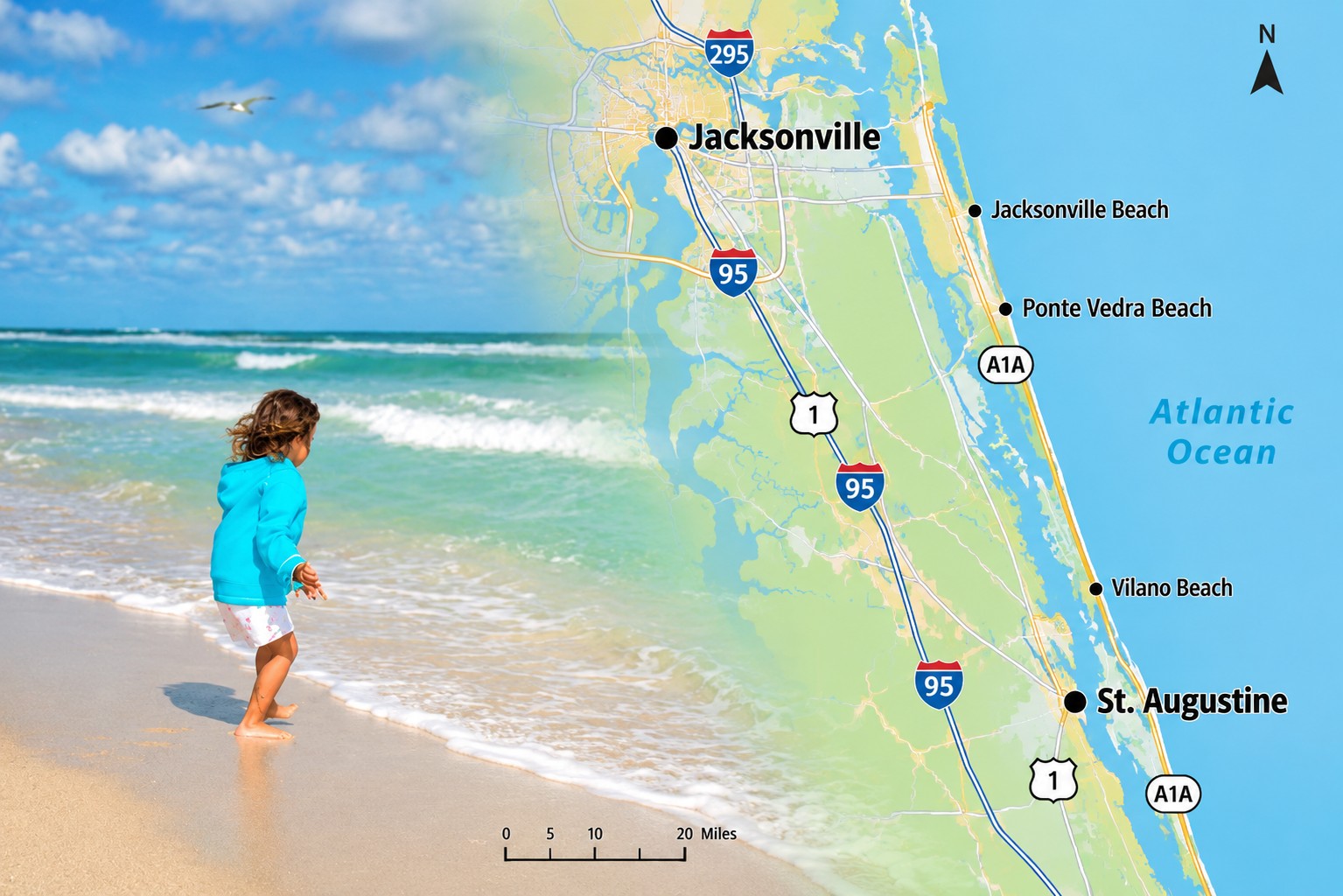
Planning the Perfect Road Trip Through Northeastern Florida
Yes, the road trip is still alive and well in the 21st century. Florida can be an ideal driving destination for those on the East Coast. Of course, the perfect road trip in Florida depends on what you and your family enjoy most when on vacation. Florida has a little bit of everything, and there is certainly a lot to explore beyond Disney. From the adventures of Juan Ponce de León to the brave astronauts who blasted off at Cape Canaveral, the rich history of Florida is well worth your time.
In this blog, we will be exploring some of the cities in the northeastern part of the state. Its quiet beauty goes unnoticed by many people who are typically drawn to the central and southern part of the state. Let’s explore St. Augustine, Jacksonville, and a few of the beautiful beaches surrounding these cities. Many find this area is best discovered in the spring (March-May) when the temperatures are comfortable and flowers are in bloom.
Starting in St. Augustine
This is a great place to begin your tour if you are already in Florida and want to drive north toward Georgia. Founded by the Spanish in 1565, St. Augustine is the oldest continuously inhabited European-established settlement in the continental United States. Its historic district is filled with Spanish colonial architecture, shops, a nice variety of unique restaurants, and attractions.
Castillo de San Marcos: The Castillo de San Marcos is the oldest masonry fort in the continental United States. This fort was built by the Spanish to defend this area and the Atlantic trade route against pirates and other enemies. Queen Regent Mariana of Spain ordered funding for the construction of a fortification made of coquina, a local shellstone that proved remarkably resistant to cannon fire.
St. George Street: As one of the main attractions in St. Augustine, this street traces its origins back to a colonial road laid out by Spanish settlers in the 16th century.
St. Augustine Lighthouse & Maritime Museum: Visitors can climb 219 steps to the top of the tower for panoramic views of the Atlantic Ocean and historic downtown St. Augustine.
Tip: Parking in St. Augustine can be challenging in the historic district, so consider parking once and exploring several attractions on foot. Another option is to ride the trolleys in the historic district. The trolley drivers are very knowledgeable about the area and make history come alive while you are comfortably sitting and taking in the beauty and history of the area.
Next, Drive up the Atlantic Coast
From St. Augustine, head north along the coast toward Jacksonville. Depending on your route, you can enjoy stretches of coastal scenery, beaches, and small “hidden gem” communities along the way.
A1A is a historic highway, now officially designated as the Jimmy Buffett Memorial Highway. It is a particularly appealing option when your priority is to see the ocean and the beautiful beaches that stretch along the highway.
Keep in mind that, depending on the day, coastal roads may present challenges such as heavy beach traffic, pedestrians and cyclists, narrow roadways, frequent intersections and traffic signals, sudden stops near beach access points, and limited parking during busy periods. If you anticipate these conditions, you can allow extra time and enjoy the experience (slowly).
Exploring Jacksonville
Jacksonville is much larger than St. Augustine and offers a different experience. You can see the St. Johns River, visit parks and museums, or continue toward Jacksonville Beach and the surrounding Atlantic coast.
St. Johns River: This vast river is considered the longest river in Florida. In some areas, it is up to three miles wide. Enjoy a variety of water sports and fresh local seafood at the riverfront restaurants.
Timucuan Ecological and Historical Preserve: This beautiful preserve is considered the largest urban park system in the country, spanning over 80,000 acres of city, state, and national lands. You can also learn about the Timucua, Indigenous peoples who lived throughout northern Florida and southeastern Georgia and were organized into numerous chiefdoms.
These suggestions are just a sampling of the beauty and history you can explore with your family, driving through this corner of Florida. Of course, you will have to visit these attractions in reverse if you are driving north to south and headed for additional adventures in southern Florida. Fuel up, remember the snacks, and enjoy your road trip.
At NHSA, our goal is to provide online driver education courses that equip all drivers with what they need to be safe drivers. Whether you are a teen seeking a learner’s permit, or an adult driver seeking a basic driver safety course, check us out online to see what courses are available in your state!
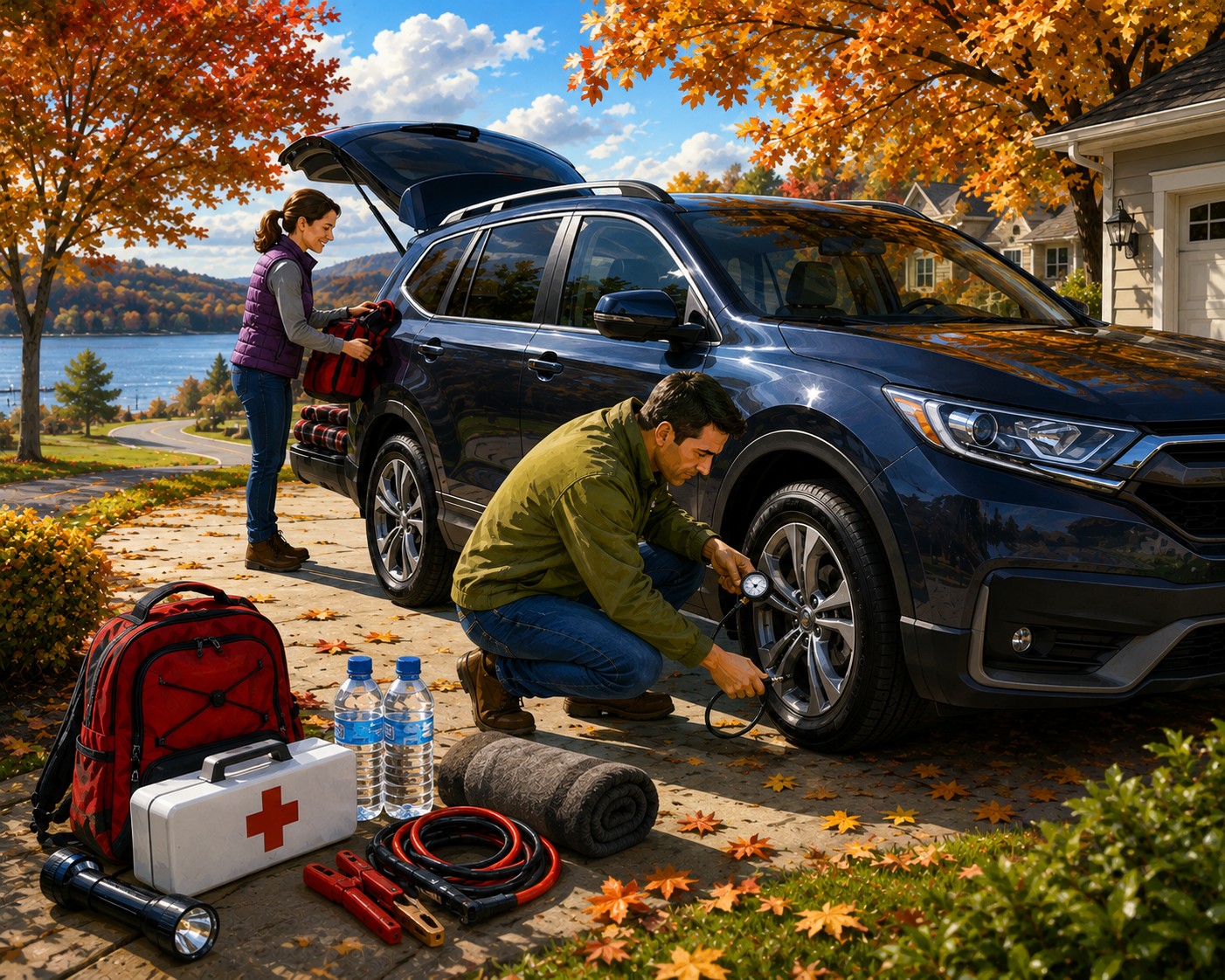
September is National Preparedness Month - How Can You Prepare Your Vehicle?
September is National Preparedness Month, a good reminder to prepare for emergencies before they happen. You may already have plans for power outages, severe weather, or other emergencies at home, but what about your vehicle?
Your vehicle needs to be prepared, too. A breakdown is inconvenient on a pleasant September afternoon. It becomes a much bigger problem when you're stranded on a dark road in freezing rain wondering why you didn't replace that questionable battery when you had the chance.
Schedule a Fall Checkup
As colder weather approaches, consider having a qualified mechanic inspect your vehicle. Even if everything seems to be working normally, an inspection may uncover problems before cold temperatures make them worse.
Ask your mechanic to check important items such as the battery and charging system, brakes, tires, belts, hoses, lights, windshield wipers, and fluid levels. Your cooling system also deserves attention. Coolant doesn't just help prevent an engine from overheating—it also provides freeze protection when temperatures drop.
Check your tires as well. Make sure they have adequate tread and are inflated to the pressure recommended by the vehicle manufacturer. Tire pressure can decrease as outdoor temperatures fall, so continue checking it throughout the colder months.
Give Your Vehicle Some Annual Attention
September can also be a convenient time for some annual vehicle care. For example, waxing the vehicle can add a layer of protection to the paint before months of rain, snow, road salt, grime, and other contaminants.
If you live in an area where road salt or deicing chemicals are commonly used, periodically washing the undercarriage during the winter can help remove corrosive material.
This is also a good time to replace worn wiper blades, clean exterior lights, and make sure your windshield-washer reservoir contains washer fluid appropriate for the temperatures you expect.
Prepare for the Unexpected
Check the emergency supplies you keep in your vehicle. Depending on your climate and travel habits, useful items may include a flashlight, first-aid kit, phone charger, reflective warning devices, basic tools, drinking water, warm clothing or a blanket, and an ice scraper. Drivers who regularly travel through snowy or remote areas may need additional supplies.
If your vehicle has a spare tire, check its air pressure and make sure the jack and necessary tools are actually in the vehicle. Discovering that your spare tire is flat at the same moment as your regular tire is a particularly cruel form of teamwork.
Be Ready for Hurricane Season
September is also an especially important month for hurricane preparedness. Atlantic hurricane activity typically reaches its seasonal peak around September 10, and much of the basin's hurricane activity occurs during August, September, and October.
If you live in or travel through a hurricane-prone area, don't wait until a storm is approaching to prepare your vehicle. Keep the fuel tank reasonably full, make sure your vehicle is mechanically ready for a possible evacuation, and know the evacuation routes in your area.
Remember that hurricanes can affect drivers hundreds of miles inland through heavy rain, flooding, fallen trees, power outages, and road closures. Most importantly, never drive through a flooded roadway. Water can be deeper or faster-moving than it appears, and the roadway underneath may be damaged or completely washed away.
Don't Wait for the First Storm
Preparing your vehicle doesn't guarantee that nothing will go wrong. It means reducing the chances of a preventable breakdown and making sure you're better equipped to handle an emergency if one occurs.
So, during National Preparedness Month, spend a little time getting your vehicle ready for the months ahead. A mechanical inspection, some basic maintenance, and a well-stocked emergency kit can make the transition into fall and winter safer.
Now go enjoy September and everything it brings—preferably with changing leaves instead of changing tires!
At NHSA, our goal is to provide online driver education courses that equip all drivers with what they need to be safe drivers. Whether you are a teen seeking a learner’s permit, or an adult driver seeking a basic driver safety course, check us out online to see what courses are available in your state!
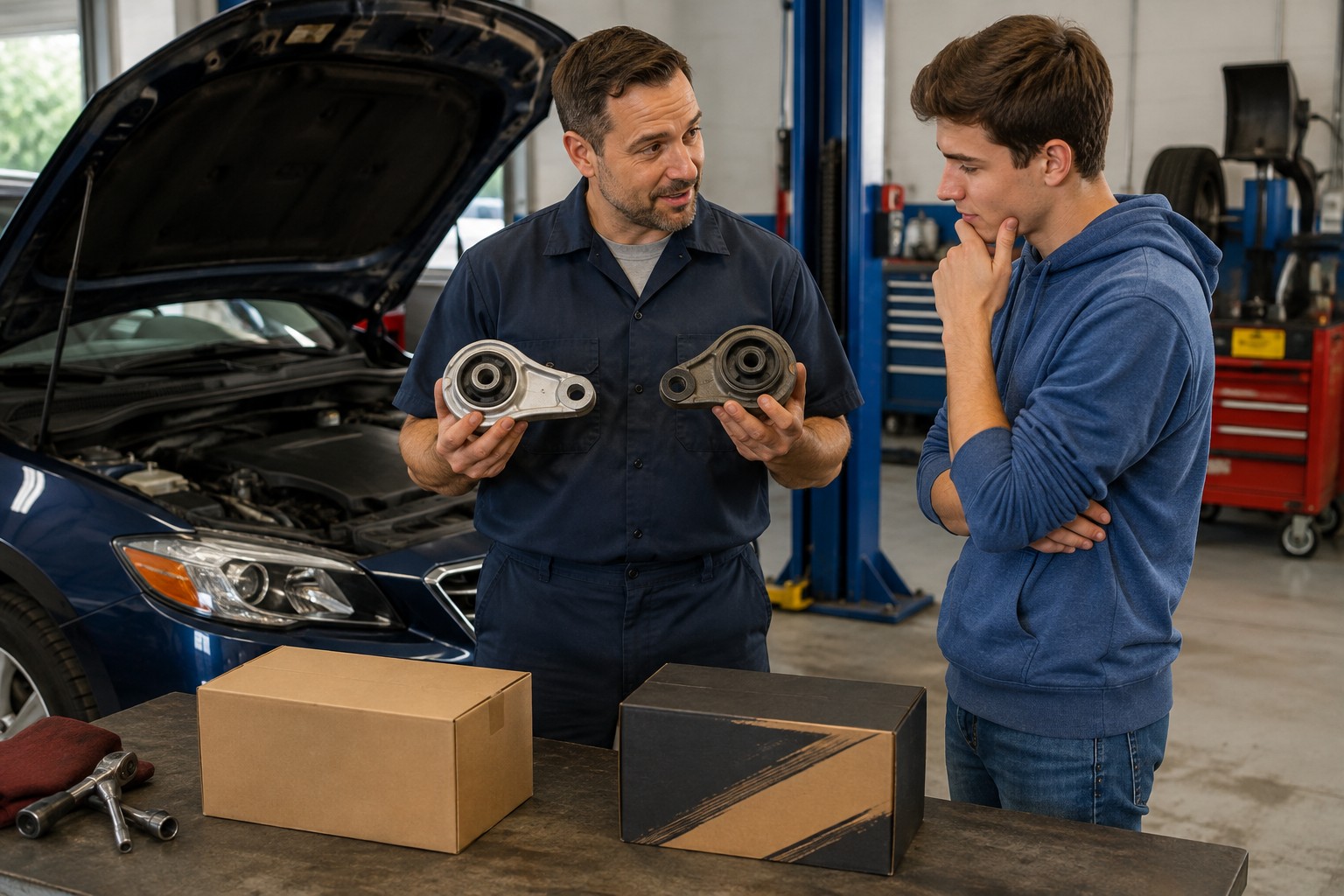
What are the Pros and Cons of Using Aftermarket Parts?
When your vehicle needs a replacement part, you may have a choice between an OEM (Original Equipment Manufacturer) part and an aftermarket part. OEM parts are made by or for the vehicle's manufacturer, while aftermarket parts are produced by other companies for use as replacements.
Neither choice is automatically better. Before deciding, it helps to understand the advantages and disadvantages of aftermarket parts.
Pros of aftermarket parts
Lower cost: Aftermarket parts are often less expensive than OEM parts, which can reduce repair costs. However, some premium or performance aftermarket parts may actually cost more.
More choices: Many manufacturers make aftermarket parts, giving consumers more brands, features, quality levels, and price points to choose from.
Often easier to find: Aftermarket parts can have better availability, potentially reducing repair delays. If your vehicle is sitting in the repair shop waiting for a part, "available today" can sound pretty appealing.
Quality can be comparable: A good-quality aftermarket part can perform as well as an OEM part. Some may even offer features or improvements that the original part did not. However, quality varies considerably among manufacturers and individual parts.
Cons of aftermarket parts
Quality varies: Not every aftermarket manufacturer produces parts to the same quality standards. Research the manufacturer and the particular part rather than assuming that all aftermarket parts are alike.
Fit may vary: Some aftermarket parts may not fit as precisely as the original part and could require additional adjustment during installation. A part that is almost the right size can quickly turn into a much bigger project than expected.
Warranty differences: Warranty coverage varies considerably among aftermarket parts. Some have limited or no warranty coverage, while others may come with warranties that are as good as—or better than—the OEM warranty. Check the warranty before you buy.
Possible effect on warranty coverage: Installing an aftermarket part does not automatically cancel your vehicle's warranty. However, if an aftermarket part or modification causes damage or contributes to a problem, the manufacturer may not cover that particular repair under the vehicle warranty.
Insurance considerations: After a crash, an insurance company may estimate repairs using aftermarket parts, depending on the insurance policy, vehicle, type of repair, and applicable state rules. Coverage specifically requiring OEM parts may depend on the provisions of your policy.
Safety-related components require extra care: For parts connected to airbags, brakes, steering, crash-protection structures, cameras, sensors, or other safety systems, it is especially important to verify that the replacement is appropriate for the vehicle. Saving a few dollars isn't much of a bargain if the part interferes with an important safety system.
Final thoughts
An aftermarket part isn't automatically lower quality, just as an OEM part isn't automatically the better choice. When choosing between them, consider quality, proper fit and function, warranty coverage, cost, and whether the part is appropriate for that particular vehicle and repair.
In other words, don't choose a replacement part simply because it is the cheapest box on the shelf.
At NHSA, our goal is to provide online driver education courses that equip all drivers with what they need to be safe drivers. Whether you are a teen seeking a learner’s permit, or an adult driver seeking a basic driver safety course, check us out online to see what courses are available in your state!
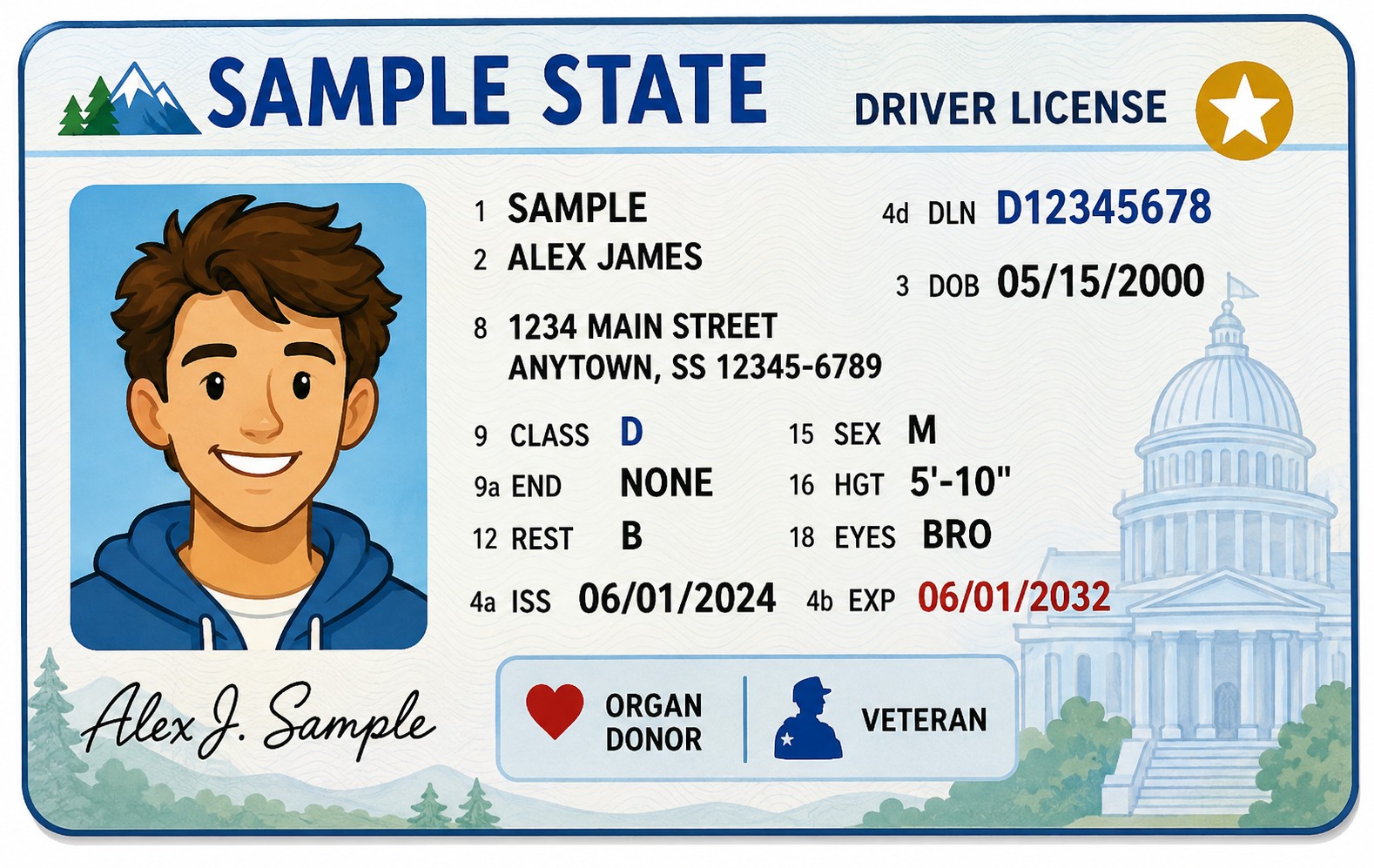
What's On Your Driver License?
Some drivers carry their driver license for years without really looking at anything other than the photo—and perhaps wishing that photo could be retaken!
But your driver license is much more than a photo ID. It contains important information that identifies you, describes your driving privileges, and may tell law enforcement officers about restrictions or endorsements that apply to you. This little card may be one of the busiest pieces of plastic in your wallet.
Driver licenses are issued by individual states, so they don't all look the same or contain exactly the same information. Even the name isn't written the same way everywhere. Some states officially call it a "driver license," while others use "driver's license" or "drivers license." Whatever your state calls it, the basic purpose is the same: it shows that the state has granted you the privilege to operate certain types of motor vehicles.
Let's decode some of the information you are likely to find on a typical U.S. driver license.
Personal Information
Your license includes information to help establish your identity. This may include several of the following: Your full legal name, date of birth, residential or mailing address, sex, height, eye color, photograph, and signature.
The information should be accurate. If you move or legally change your name, check with your state's driver licensing agency to find out how quickly you must report the change and whether you need a replacement card. Deadlines and procedures vary by state.
Driver License Number
Each driver license has an identifying number assigned by the state licensing agency. You may need to provide your driver license number when purchasing auto insurance, renting a vehicle, dealing with law enforcement, or completing certain official transactions.
Because this number is connected to important personal information, don't post photographs of your driver license online or casually share the number with other people. Your friends on social media really don't need that good a look at your new license!
License Class
Your license generally identifies the class of vehicle you are authorized to operate. For most drivers, this means a noncommercial license that permits them to operate ordinary passenger vehicles. States use different class names and letters, however, so don't assume that a particular letter means exactly the same thing everywhere.
Endorsements
An endorsement gives a driver additional driving privileges beyond those provided by the basic license. One common example is a motorcycle endorsement.
Restrictions
A restriction limits how or under what conditions you are permitted to drive. For example, a driver who passed the vision test while wearing glasses or contact lenses may have a corrective-lenses restriction. Other restrictions could require special vehicle equipment or limit driving to certain conditions.
Issue and Expiration Dates
Your driver license normally shows the date it was issued and the date it expires. Your license doesn't wrinkle with age—but it does expire! The length of time a license remains valid varies by state and sometimes by the driver's age or other circumstances. It is your responsibility to renew it on time. Don't assume that your state will remind you. Knowing the expiration date and renewing on time is much better than discovering your mistake during a traffic stop two months after it expired.
REAL ID
You may see a star near the top of your driver license. This generally indicates that the card is REAL ID compliant. Since May 7, 2025, travelers age 18 and older generally need a REAL ID-compliant identification document (or another federally accepted form of identification, such as a passport) to pass through TSA security checkpoints for domestic commercial flights.
Organ Donor Information
Many states allow drivers to register as organ and tissue donors when applying for or renewing a driver license or identification card. If you register, your license may display an organ-donor symbol or other designation.
Keep Your License Safe
A driver license is an important legal identification document, so treat it accordingly. Keep it secure and avoid damaging it. Don't lend it to another person, alter it, or post a clear photograph of it online.
It's a small card, but there's a surprising amount of information packed onto it—and knowing what that information means is part of being a responsible driver.
At NHSA, our goal is to provide online driver education courses that equip all drivers with what they need to be safe drivers. Whether you are a teen seeking a learner’s permit, or an adult driver seeking a basic driver safety course, check us out online to see what courses are available in your state!
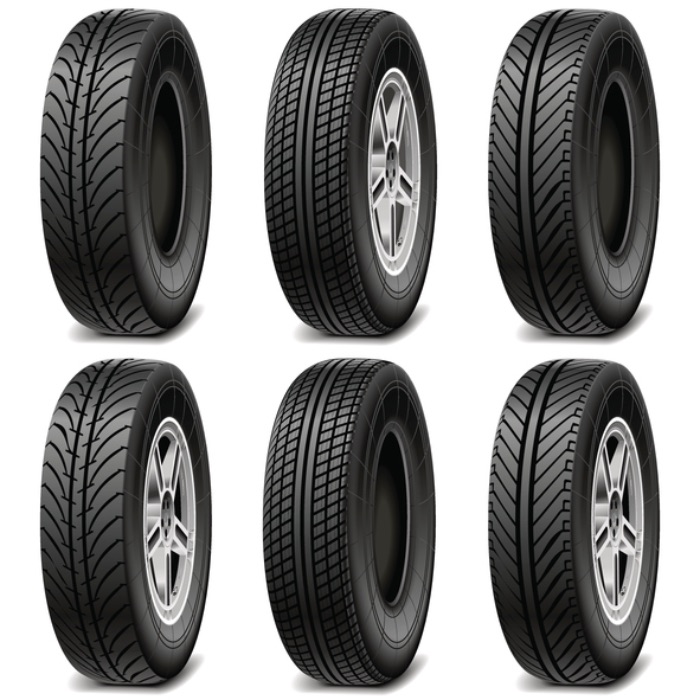
How to Choose the Correct Tires for Your Vehicle
Let's talk tires. Why are good tires so important? Your tires are the only parts of your vehicle that actually touch the road. That makes them pretty important!
Choosing the correct tires can improve traction, handling, braking, and fuel efficiency.
How Do You Know the Correct Tire Size?
Always choose a tire size recommended by your vehicle manufacturer. You can usually find the recommended size:
- On the tire information sticker on the driver's side door jamb.
- In your vehicle owner's manual.
Note: Don't assume the tires currently on the vehicle are the correct size. A previous owner may have installed a different size.
Using the wrong tire size can affect steering, braking, handling, and fuel economy. A significantly different tire diameter can also make your speedometer inaccurate.
Understand the Tire Sidewall
A tire marked P215/65R16 98H, for example, provides quite a bit of information:
P – Designed for a passenger vehicle
215 – Tire width in millimeters
65 – Aspect ratio (sidewall height as a percentage of tire width)
R – Radial construction
16 – Wheel diameter in inches
98 – Load index
H – Speed rating
You don't need to memorize every tire code, but knowing what those numbers and letters mean can help you shop for the correct tires.
Select the Right Type of Tire
Choose tires that match your vehicle and the conditions in which you normally drive:
- All-Season Tires: Designed to provide a balance of performance in dry and wet conditions and some light winter conditions.
- Summer Tires: Provide good handling and traction in warm weather but are not designed for snow or freezing temperatures.
- Winter (Snow) Tires: Designed to provide better traction in snow, ice, and cold temperatures.
- All-Terrain Tires: Designed for a combination of paved-road and off-road driving.
- Mud-Terrain Tires: Designed primarily for serious off-road conditions and may be noisier and wear more quickly on pavement.
Buy Matching Tires
For the best handling and stability, follow the vehicle and tire manufacturers' recommendations when replacing tires. Ideally, tires should have compatible size, construction, load capacity, speed rating, and performance characteristics. Avoid randomly mixing different types of tires because doing so can affect handling and braking.
Check the Tire's Age
Tires deteriorate as they age, even if they still have plenty of tread. Check the DOT Tire Identification Number (TIN) on the sidewall. The last four digits identify the week and year the tire was manufactured. For example, 3822 means the tire was manufactured during the 38th week of 2022.
Vehicle and tire manufacturers may recommend replacing tires based on age—often somewhere between six and ten years—regardless of treadwear. Always follow the recommendations for your particular vehicle and tires.
Look at the Tire Ratings
Many passenger tires display UTQG (Uniform Tire Quality Grading) ratings:
- Treadwear: A comparative rating of expected tread wear.
- Traction: Rates the tire's ability to stop on wet pavement under specified test conditions.
- Temperature: Rates the tire's resistance to heat buildup.
These ratings can help you compare similar tires, but they should not be the only factor in your decision.
Maintain Your Tires
Choosing the right tires is only the beginning. Help them do their job by:
- Checking tire pressure at least once a month.
- Rotating tires every 5,000–8,000 miles, or as recommended by the vehicle manufacturer.
- Inspecting tires for uneven wear, cuts, punctures, cracks, or bulges.
- Replacing tires when the tread reaches 2/32 inch.
Your tires aren't the most exciting part of your vehicle, but when you need to stop quickly on a wet road, you'll be very glad you chose—and maintained—the right ones.
At NHSA, our goal is to provide online driver education courses that equip all drivers with what they need to be safe drivers. Whether you are a teen seeking a learner’s permit, or an adult driver seeking a basic driver safety course, check us out online to see what courses are available in your state!
